As Advanced Driver Assistance Systems become standard in modern vehicles, collision repair shops are under increasing pressure to document calibrations correctly and completely.
The repair itself is only part of the process now.
Today, insurers, OEMs, and regulators expect clear, traceable calibration records that prove safety systems were properly restored after repairs. Unfortunately, many shops are still relying on inconsistent documentation practices that create unnecessary risk.
And even small reporting mistakes can have big consequences.
Incomplete or inaccurate ADAS calibration documentation can lead to:
- Delayed insurance payments
• Rejected claims
• Failed audits
• Compliance issues
• Increased liability exposure
• Customer disputes
• Repair delays
The good news is that most of these problems are avoidable once shops understand where documentation errors commonly happen and how to correct them.
Why ADAS Documentation Matters So Much
ADAS systems directly affect critical vehicle safety functions, including:
- Automatic emergency braking
• Lane keeping assist
• Adaptive cruise control
• Blind spot monitoring
• Forward collision warning
After a collision repair, windshield replacement, alignment, or suspension repair, these systems often require recalibration to restore proper functionality.
But simply performing the calibration is not enough.
Repair shops also need documentation that proves:
- OEM procedures were followed
• Required calibrations were identified
• Systems were verified after repair
• Proper tools and conditions were used
At 1 Source ADAS, the focus is helping collision repair facilities simplify this process with AI-powered calibration reporting designed to improve accuracy, efficiency, and compliance.
Mistake #1: Missing OEM Procedure Documentation
One of the most common reporting issues is failing to include the actual OEM calibration requirements used during the repair.
Many reports simply state that a calibration was completed without identifying:
- Which procedures were followed
• Which systems required calibration
• OEM references or links
• Whether static or dynamic calibration was required
This creates problems during insurance reviews and audits because there is no clear proof that manufacturer standards were followed.
How to Avoid It
Always include:
- OEM procedure references
• Calibration requirements
• Supporting manufacturer documentation
• Links or screenshots when available
Automated reporting systems can help streamline this process by pulling procedures directly from repair estimates.
Mistake #2: Incomplete Pre-Scan and Post-Scan Reports
Another major issue is incomplete diagnostic documentation.
Some repair files contain only post-repair scans, while others fail to include scan results entirely.
Without both scans, insurers and auditors cannot verify:
- The condition of the vehicle before repairs
• Existing diagnostic trouble codes
• Whether ADAS faults were resolved successfully
How to Avoid It
Every repair involving ADAS systems should include:
- Pre-repair scan reports
• Post-repair scan reports
• Diagnostic trouble code documentation
• Final system verification
Complete scan records create a stronger audit trail and improve claim approval speed.
Mistake #3: Failing to Document Calibration Conditions
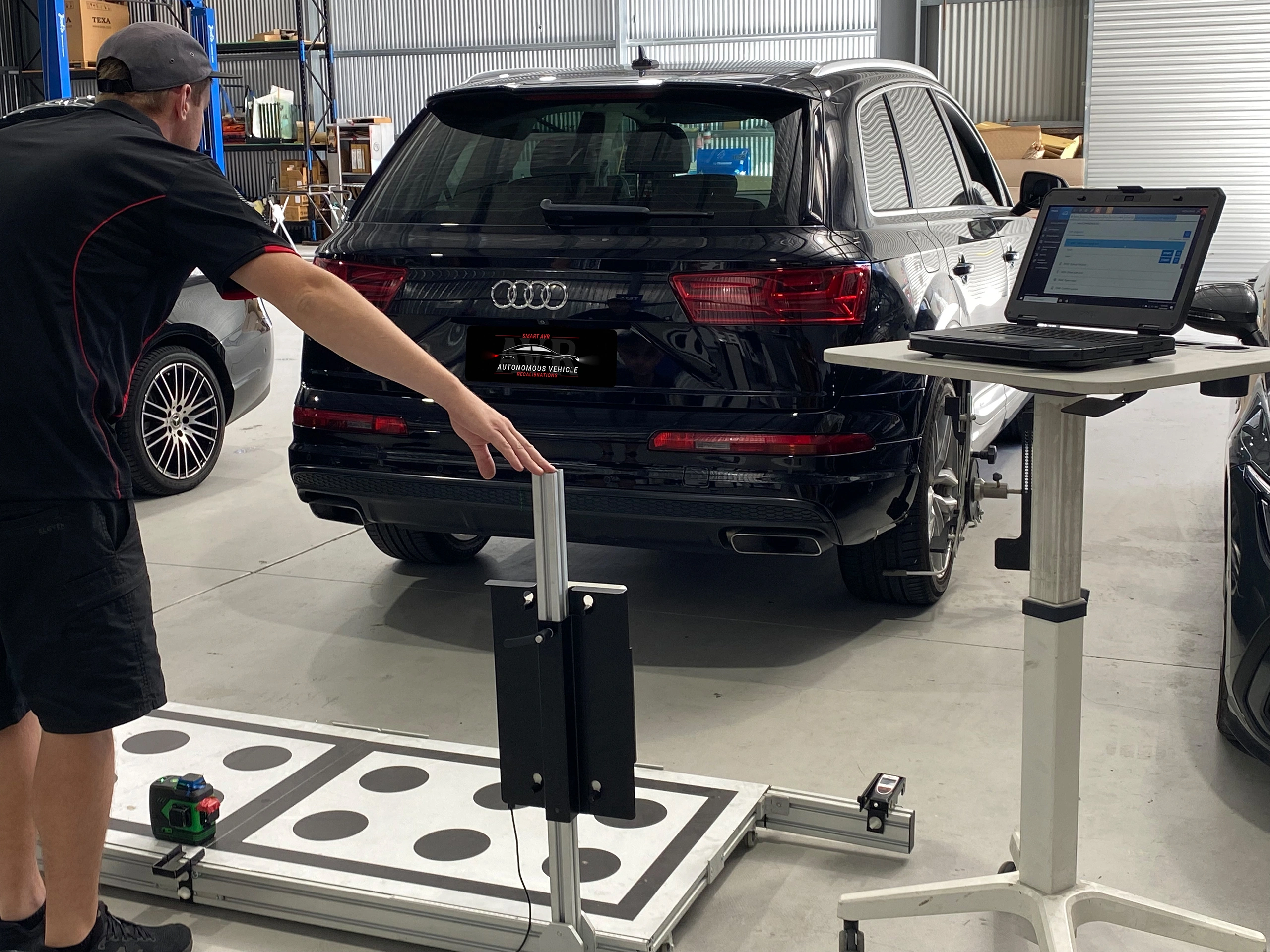
ADAS calibration often requires highly controlled conditions to meet OEM standards.
However, many shops fail to document important setup details such as:
- Floor level verification
• Tire pressure
• Vehicle ride height
• Lighting conditions
• Fuel level
• Target placement
If calibration conditions are not documented, insurers or legal reviewers may question whether the calibration was performed correctly.
How to Avoid It
Include all relevant environmental and setup conditions within the report whenever required by OEM procedures.
Detailed documentation strengthens compliance and reduces future disputes.
Mistake #4: Missing Technician Information
Some reports fail to identify who actually performed the calibration work.
That creates accountability gaps and weakens the credibility of the repair file.
Missing technician information can become especially problematic during:
- Insurance audits
• OEM certification reviews
• Legal investigations
How to Avoid It
Every report should clearly identify:
- Technician name
• Certification credentials
• Date and time of calibration
• Repair facility information
This helps establish a traceable and defensible repair record.
Mistake #5: Using Generic or Inconsistent Reporting Templates
Not all ADAS systems are the same. Different vehicle manufacturers require different procedures, calibration methods, and documentation standards.
Using generic templates that fail to capture vehicle-specific details often leads to incomplete reporting.
How to Avoid It
Use reporting systems designed specifically for ADAS workflows and OEM compliance requirements.
According to the 1 Source ADAS brand mission, their AI-powered platform generates “precise, actionable reports directly from repair estimates,” helping repair facilities improve documentation accuracy and consistency.
Mistake #6: Missing Calibration Verification Results
Some reports only indicate that a calibration was attempted, without confirming whether it was completed successfully.
That creates uncertainty about the final repair status.
Insurers and auditors want confirmation that:
- The system passed calibration
• No unresolved faults remain
• Vehicle safety systems were restored properly
How to Avoid It
Include final verification details such as:
- Pass/fail calibration status
• Successful completion confirmation
• Final scan results
• Road test verification if required
Clear final validation helps eliminate ambiguity.
Mistake #7: Poor Record Organization
Even when all the right information exists, poorly organized documentation can still create problems.
If reports are scattered across multiple systems or difficult to review, insurers may delay approvals while requesting clarification.
How to Avoid It
Create standardized documentation workflows that centralize:
- OEM procedures
• Scan reports
• Calibration results
• Technician records
• Supporting images and attachments
Well-organized files improve efficiency and professionalism.
Mistake #8: Relying Too Heavily on Manual Processes
Manual documentation increases the likelihood of:
- Missed procedures
• Data entry errors
• Inconsistent reporting
• Lost documentation
As ADAS technology becomes more complex, manual workflows become harder to manage accurately.
How to Avoid It
Many repair facilities are moving toward AI-powered reporting systems that automate documentation and reduce human error.
Workflow-driven platforms help shops maintain consistency while improving repair speed and compliance readiness.
How Documentation Errors Impact Insurance Claims
Incomplete or inconsistent calibration reports are one of the biggest causes of claim slowdowns in modern collision repair.
Documentation gaps often trigger:
- Supplemental requests
• Additional insurer reviews
• Delayed approvals
• Payment disputes
In some cases, claims may be rejected entirely if required calibration proof cannot be verified.
That is why accurate reporting is becoming just as important as the repair itself.
The Liability Risk Shops Cannot Ignore
ADAS systems are safety-critical technologies.
If a future accident raises questions about vehicle system performance, repair documentation may become part of a legal investigation.
Incomplete records make it much harder for repair facilities to demonstrate that proper procedures were followed.
Comprehensive documentation helps establish that:
- OEM requirements were identified
• Calibrations were completed correctly
• Safety systems were verified before delivery
Strong documentation protects both the customer and the repair facility.
The Future of Collision Repair Depends on Better Reporting
The collision repair industry is changing quickly.
As vehicles become more software-driven and safety systems more advanced, insurers and regulators will continue demanding higher documentation standards.
The shops that build reliable calibration reporting processes now will be better positioned to:
- Reduce claim delays
• Improve insurer relationships
• Pass audits more confidently
• Reduce liability exposure
• Strengthen customer trust
• Improve operational efficiency
Final Thoughts
ADAS calibration documentation is no longer optional paperwork. It is a critical part of modern repair compliance and customer safety.
Small reporting mistakes can create major problems, from delayed claims and failed audits to legal exposure and damaged credibility.
The good news is that most documentation errors are preventable with the right processes and reporting systems in place.
Solutions like 1 Source ADAS help collision repair facilities simplify calibration documentation with AI-powered reporting tools designed to improve accuracy, consistency, and workflow efficiency.