Collision repair shop owners, service managers, calibration technicians, and estimators who need to streamline their ADAS workflow and meet insurer and OEM requirements without wasting time.

Quick-Check ADAS Workflow Blueprint
A visual and written step-by-step process that walks technicians through every phase of ADAS calibration reporting:
How to identify which ADAS systems may be impacted after a collision
Where to find OEM procedures and how to interpret them
The fastest way to document required calibrations with supporting data
How to integrate this workflow into your estimating and repair process
Avoid the most common documentation issues that trigger insurer pushback or rework. Learn the most common pitfalls shops make when handling ADAS documentation:
Result: Prevent underbilling, speed up cycle times, and get paid faster by avoiding these common issues.
Most insurers require detailed proof that every calibration was necessary and performed correctly. When shops fail to document affected systems or forget to attach supporting data, claims are delayed or denied.
The cost: Payment delays, insurer friction, and rework
The fix: Use AI-powered reporting that pulls procedures directly from the repair estimate and links to OEM instructions automatically.
Technicians who rely on printed manuals, forums, or outdated PDFs run the risk of following incorrect procedures. ADAS requirements are frequently updated, and missing just one step can create liability.
The cost: Redos, denied claims, and safety risks
The fix: Automate the process with a platform that always pulls the most current OEM guidelines for the vehicle, trim level, and repair type.

Multi-location MSOs often struggle with different techs using different methods. This leads to inconsistent results, which puts DRP relationships and shop reputation at risk.
The cost: Brand damage, audit failures, and training overload
The fix: Standardize the workflow with report templates that deliver the same clear, technician-friendly steps every time no matter who’s doing the job.

When pre-scans, post-scans, and calibrations are done but not linked properly to the repair plan, you risk leaving money on the table or missing billable steps.
The cost: Unbilled work, missed calibration charges, compliance gaps
The fix: Use a reporting tool that attaches everything to the repair estimate in real time—nothing gets forgotten or skipped.
Even your best techs are human. If your ADAS process relies solely on experience, it leaves room for errors and inconsistent documentation—especially under pressure.
The cost: Risk of missed calibrations and increased liability
The fix: Let the software do the remembering. With AI-driven reporting, every step is prompted, logged, and documented for complete peace of mind.
Pulls OEM procedures from estimates automatically
Syncs with CCC, Mitchell, and more
Fully insurer-ready — no edits needed
Consistent results across locations & techs
Built-in reminders to prevent missed steps
Rejected Claims: Missing one step = denied payment
Unbilled Work: Calibrations completed but not documented
Audit Fails: No consistency across techs or locations
Time Sinks: 30–45 mins on every report
Liability Risk: Following outdated OEM steps
Inside this FREE guide:
See the difference between doing it the hard way versus the smart way:
Result: Save up to 45 minutes per job, standardize reporting across locations, and reduce liability exposure.
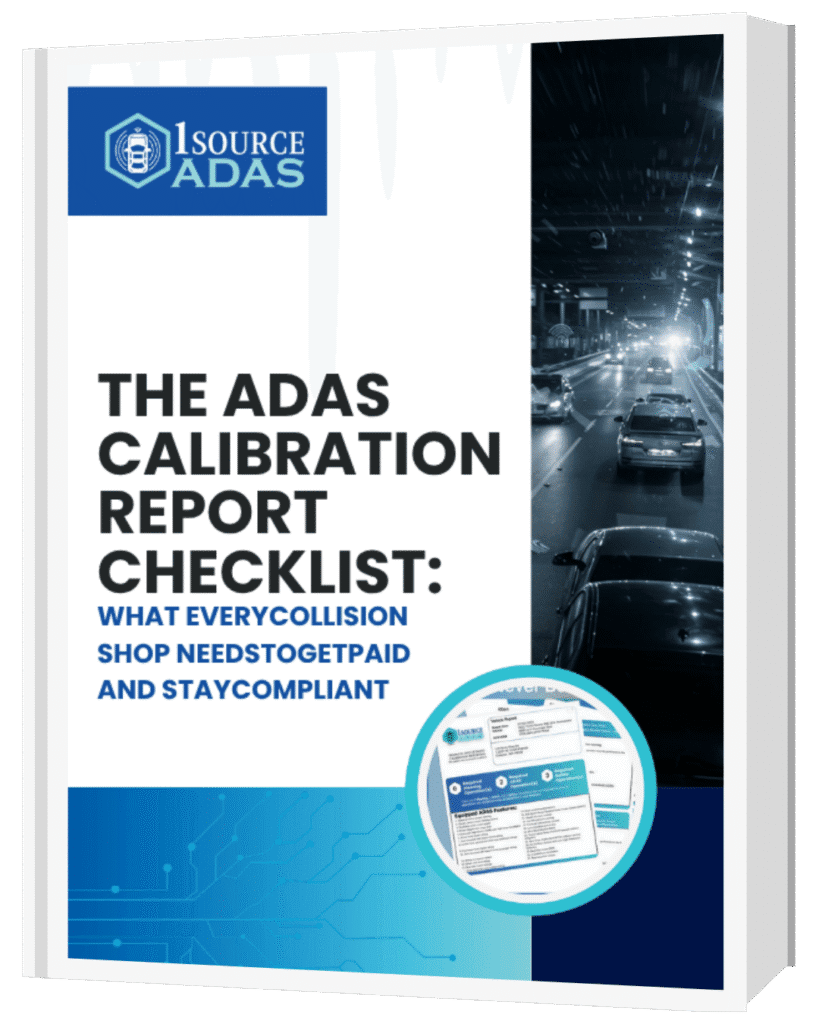
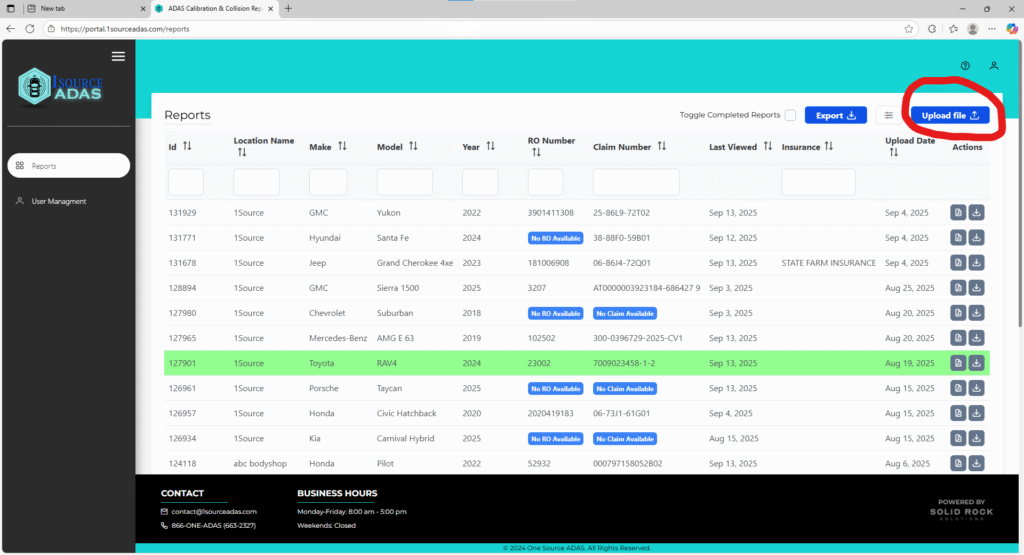
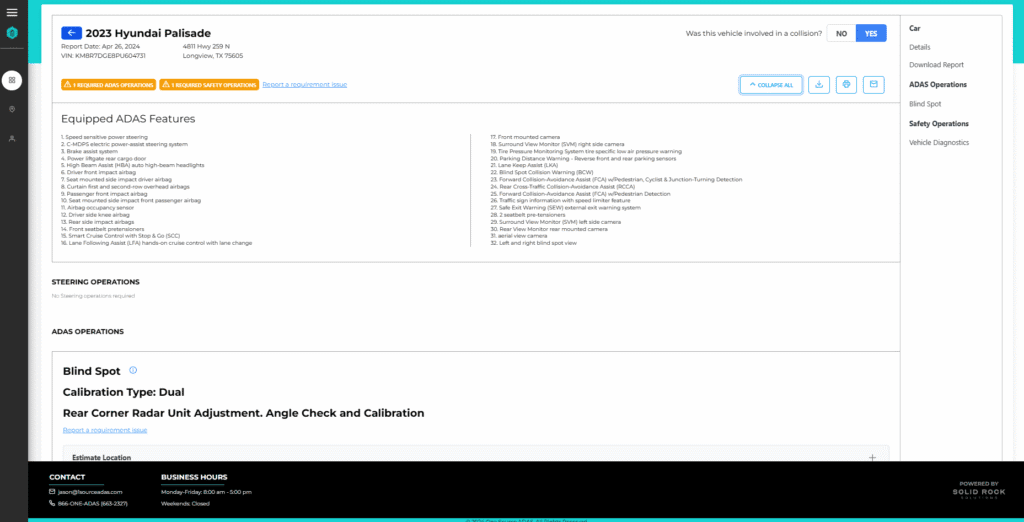
Get a sneak peek at what an insurer-ready, OEM-linked report looks like from 1 Source ADAS. Get a preview of what a fully built 1 Source ADAS report looks like:
Result: Understand what “done right” looks like so your team has a benchmark to follow.
Check off each item as you gosubmit it right the first time and get paid faster. A printable checklist your estimator or front office can use before sending reports:
Result: Reduce back-and-forth with insurers and ensure faster approvals with complete files.
Avoid the most common documentation issues that trigger insurer pushback or rework. Learn the most common pitfalls shops make when handling ADAS documentation:
| Feature | Manual/OEM Research | 1 Source ADAS AI-Powered Reporting |
|---|---|---|
| Time Required | 30–45 minutes per repair | Under 2 minutes per report |
| Access to OEM Procedures | Manually searched on multiple portals | Pulled automatically from repair estimate |
| Report Accuracy | Technician-dependent, prone to variation | Consistently accurate and OEM-aligned |
| Documentation Consistency | Varies by tech and location | Standardized across all shops and users |
| Integration with Estimating | Requires manual upload and attachment | Auto-attaches to CCC, Mitchell, and more |
| Insurance Approval Readiness | Requires edits and additional notes | Report-ready for fast insurer acceptance |
| Training Required | High—requires experience with OEM databases | Low—intuitive, step-by-step interface |
| Updates and Compliance | Risk of outdated or missed procedure changes | Always current with evolving OEM standards |
| Scalability for MSOs | Difficult to duplicate workflows | Easy to scale across locations and techs |
| Support | None | Real support from ADAS and collision pros |
Manual OEM research burns time, drains profits, and invites errors.
1 Source ADAS automates the process, saves your team time, and protects your bottom line with faster, more accurate reports.